Free Online Calorie Tracker with Meal Planner
A daily calorie intake tracker for weight management – also works as a weight loss calorie deficit tracker tool and a free calorie and meal planner for muscle gain.
Average Results: Users tracking calories lose 3x more weight than those who don't. Consistent meal planning can reduce calorie intake by 20-30% without feeling deprived.
Your Daily Calorie Tracking Results
Why a Meal Planning Calorie Counter Makes Weight Loss Easier
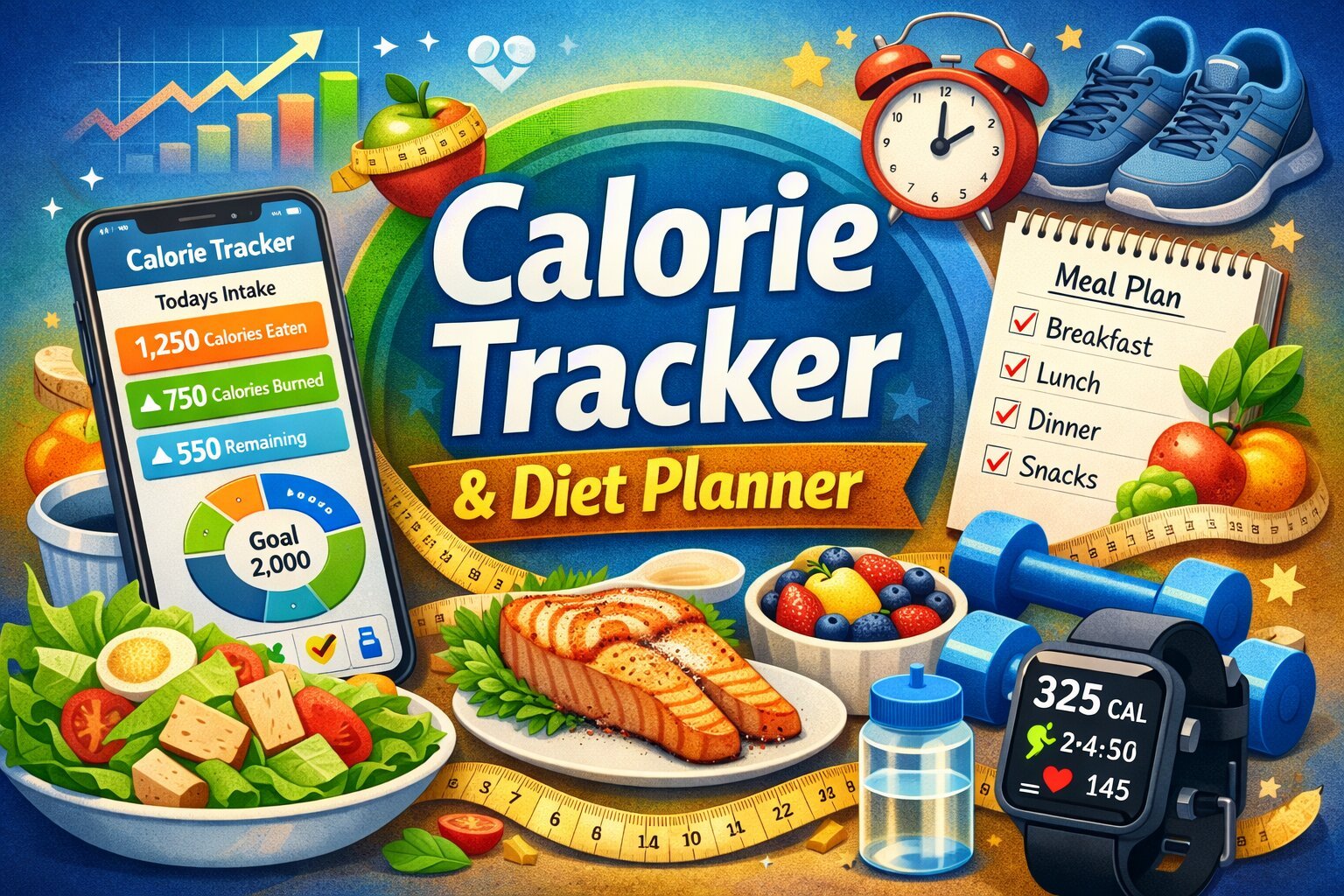
Let’s be honest – losing weight can feel like a full‑time job. You’re supposed to count every bite, remember portion sizes, and somehow stay sane. That’s exactly why a meal planning calorie counter for breakfast lunch dinner is a game‑changer. Instead of juggling multiple apps or sticky notes, you can quickly log your meals here and see your daily total in one place. Our free online calorie tracker with meal planner for weight loss does the heavy lifting: you just type in what you ate, and it tells you exactly how many calories you’ve consumed.
What makes this tool special is its simplicity. You don’t need to create an account or memorize food databases. Just estimate your breakfast, lunch, dinner, and snacks – and the calculator instantly shows your total. If you’ve ever searched for a daily calorie intake tracker for weight management that doesn’t overwhelm you with ads or complex menus, you’ve found it. And if you’re trying to build muscle, the same free calorie and meal planner for muscle gain flips into a surplus tracker – just set a higher goal and watch the progress bar fill up.
Research consistently shows that people who track what they eat lose twice as much weight as those who don’t. It’s not about obsession; it’s about awareness. When you see that afternoon latte adds 300 calories, you might decide to make it a smaller size or skip the whipped cream. Over a week, those tiny adjustments add up. Use this weight loss calorie deficit tracker tool regularly, and you’ll start noticing patterns – maybe you always over‑snack after dinner, or you skimp on protein at lunch. That insight is gold.
And you don’t have to do it forever. Most people only need to track consistently for a few weeks to recalibrate their internal portion sensors. After that, you can check in once a week or when you feel your habits slipping. Combined with other free resources on our site, like the calorie needs calculator, you’ll have a solid foundation for any goal.
How to Use This Meal Planner for Real Results
- Set a realistic goal: Use the optional target box. If you’re not sure, 2,000 calories is a common starting point for women and 2,500 for men.
- Log honestly: Even that handful of almonds or the cream in your coffee counts. Underreporting is the biggest tracking mistake.
- Watch the progress bar: The visual tracker shows whether you’re under, over, or spot‑on your target. Green and blue zones mean you’re doing well; orange means it’s time to tweak.
- Adjust and experiment: If you’re always hungry at dinner, maybe your lunch needs more protein. The data helps you fine‑tune, not just restrict.
Remember, this meal planning calorie counter for breakfast lunch dinner isn’t about perfection – it’s about building a sustainable rhythm. And if you’re looking for a deeper dive into your nutrition, our BMR calculator can tell you exactly how many calories your body burns at rest, which helps you set a more precise goal.
About the Author

Registered Dietitian & Health Coach
Laura has guided thousands of clients through sustainable weight loss using simple tracking tools. She believes that food should be enjoyed, not feared, and that knowledge – not willpower – is the real secret to success.
Medical Review

Internal Medicine & Obesity Medicine
This content has been reviewed for accuracy and safety. It is not a substitute for personalized medical advice. Always discuss your weight management plan with your doctor.
Frequently Asked Questions About Calorie Tracking
For weight management, aim for 80-90% accuracy. Don't stress over exact measurements - focus on consistency. Studies show that consistent tracking, even with small errors, leads to better results than sporadic perfect tracking.
A safe calorie deficit is typically 500-750 calories below your maintenance level, leading to 1-1.5 pounds of weight loss per week. For most women, this is 1,500-1,800 calories; for men, 2,000-2,300 calories.
When starting, track daily for 2-4 weeks to build awareness. After establishing habits, you can switch to periodic tracking (3-4 days/week) or focus tracking on challenging days. Consistency matters more than perfection.
Ready to Take Control of Your Nutrition?
Bookmark this page and come back daily. Over time, these small check‑ins become second nature. For more support, visit our full Health Tools collection.