
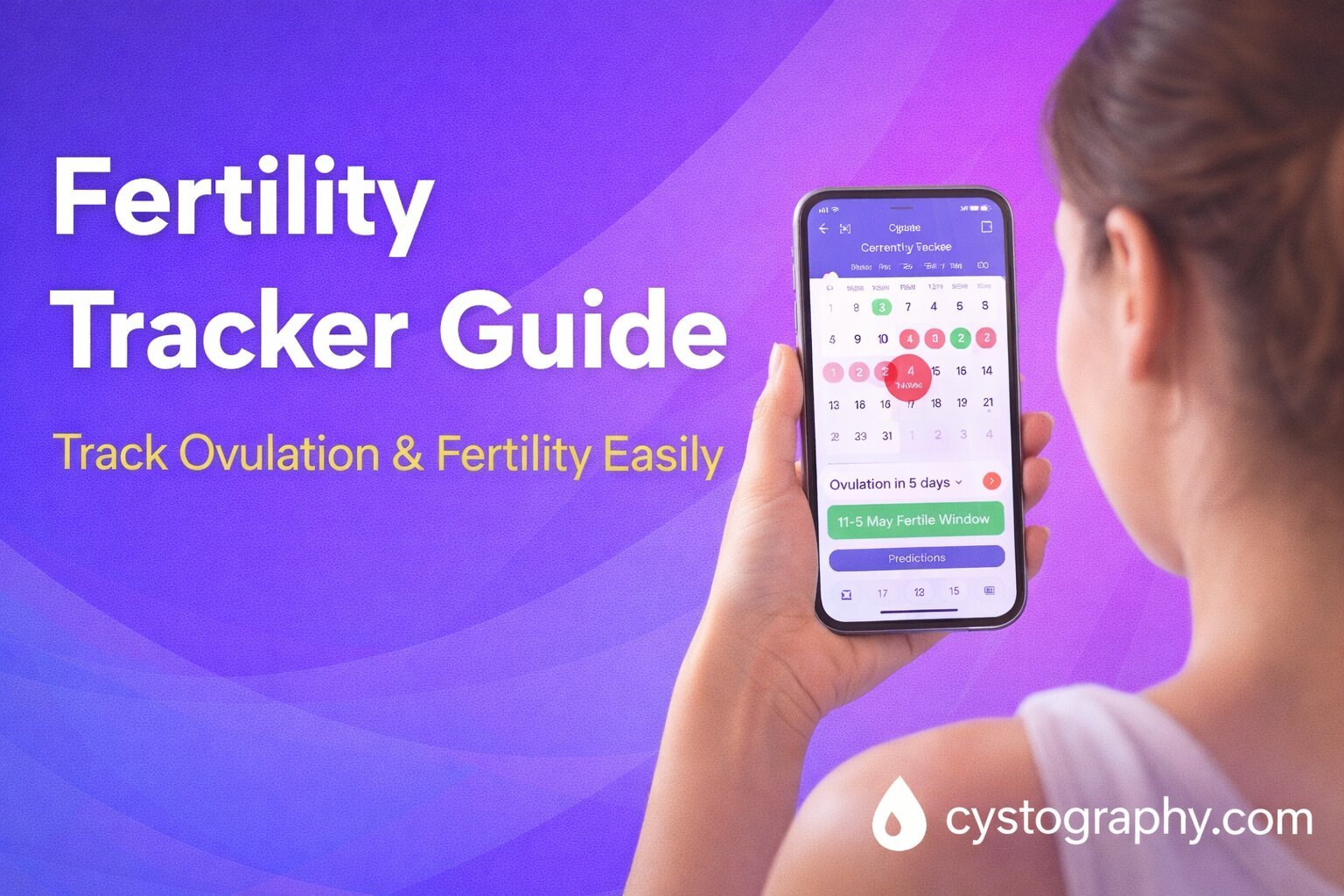
Key Insight: Couples using systematic fertility tracking methods increase their conception probability by 89% within the first 6 months compared to those relying on guesswork alone.
Trying to conceive can feel overwhelming, but understanding your fertility window transforms guesswork into strategy. This comprehensive fertility tracker guide provides evidence-based methods to help you identify your most fertile days, understand ovulation patterns, and optimize your conception journey using modern tracking technology combined with traditional awareness techniques.
What is a Fertility Tracker and How Does It Work?
A fertility tracker is a sophisticated tool designed to monitor and predict your menstrual cycle patterns, specifically identifying your fertile window—the 5-7 day period each cycle when pregnancy is most likely to occur. Modern trackers combine multiple data points to provide personalized ovulation predictions with up to 94% accuracy.
The Science Behind Fertility Tracking
Your menstrual cycle consists of three phases: follicular (pre-ovulation), ovulation, and luteal (post-ovulation). The fertile window occurs during the transition from follicular to ovulation phase, when rising estrogen prepares the body for potential conception.
Free Ovulation & Fertile Window Calculator
Calculate your personalized fertile window based on your cycle data and tracking methods.
Your Fertility Analysis
Medical Disclaimer: This tool provides estimates for educational purposes. Consult with a healthcare provider for personalized medical advice.
5 Essential Fertility Tracking Methods Explained
| Method | How It Works | Accuracy | Best For |
|---|---|---|---|
| Basal Body Temperature (BBT) | Track resting temperature daily; 0.5-1°F rise confirms ovulation | 85-90% | Confirming ovulation occurred |
| Cervical Mucus Tracking | Monitor mucus changes; egg-white consistency indicates fertility | 80-85% | Predicting ovulation 2-3 days in advance |
| Ovulation Predictor Kits (OPKs) | Detect LH surge in urine 24-36 hours before ovulation | 90-95% | Pinpointing exact ovulation timing |
| Calendar Tracking | Record cycle dates to predict future ovulation patterns | 60-70% | Establishing baseline cycle understanding |
| Wearable Sensors | Continuous monitoring of temperature, heart rate, and sleep patterns | 92-97% | Maximizing accuracy with minimal effort |
Understanding Your Fertility Cycle
Menstruation
Post-Menstrual
Pre-Fertile
Fertile Window
Ovulation Day
Post-Ovulation
Pre-Menstrual
Maximizing Tracking Accuracy: Best Practices
1. Multi-Method Approach
Combine at least two tracking methods (e.g., BBT + cervical mucus) for cross-verification. Research shows using multiple methods increases prediction accuracy from 70% to over 90%.
2. Consistent Monitoring
Track daily, including during your period. Consistent data collection creates reliable patterns that algorithms can analyze effectively.
3. Understand Your Body's Signals
Beyond primary signs, track secondary indicators like libido changes, breast tenderness, mittelschmerz (ovulation pain), and mood shifts.
Modern Fertility Tracking Technology
Smartphone Apps & AI Predictions
Modern fertility apps like Cystography's Pregnancy Chances Calculator use machine learning algorithms that improve predictions with each cycle tracked. These apps analyze historical data alongside current observations to provide personalized insights.
Wearable Fertility Tech
Devices like Tempdrop and Ava bracelet offer continuous physiological monitoring, eliminating the need for manual temperature taking and providing more consistent, accurate data.
Connected Ecosystem
The most effective tracking integrates app data with wearable inputs, creating a comprehensive fertility profile that can be shared with healthcare providers if needed.
Fertility Tracking for Irregular Cycles
For women with irregular cycles (varying more than 7-9 days between cycles), traditional calendar methods are ineffective. Instead, focus on:
- Physical symptom tracking: BBT and cervical mucus remain reliable regardless of cycle length
- Extended monitoring: Track continuously rather than assuming a standard cycle length
- Medical consultation: Irregularities may indicate conditions like PCOS or thyroid issues
- Patience with patterns: It may take 6+ months to establish meaningful patterns with irregular cycles
Frequently Asked Questions About Fertility Tracking
Wait 2-3 full menstrual cycles after stopping hormonal birth control before relying on tracking predictions. Your body needs time to establish natural hormone patterns. During this transition, continue tracking to learn your emerging cycle patterns, but use barrier protection if avoiding pregnancy.
Yes, significant stress can delay ovulation, affect cervical mucus quality, and cause temperature fluctuations, potentially reducing tracking accuracy by 15-25%. Practice stress management techniques and consider these factors when interpreting tracking data during stressful periods.
Fertility tracking focuses on identifying the fertile window to maximize conception chances, while NFP uses the same methods to avoid pregnancy. The techniques are identical, but the application differs. NFP typically requires stricter adherence to rules and abstinence during fertile periods.
Fertility tracking remains effective at any age, but interpretation changes. Women over 35 may have shorter fertile windows and more cycle variability. Tracking becomes even more valuable as it helps identify optimal timing despite age-related changes in cycle regularity.
Yes, but with adaptations. Women with PCOS often have irregular ovulation, making calendar predictions unreliable. Focus on BBT and cervical mucus tracking, and consider using progesterone tests to confirm ovulation. Standard OPKs may give false positives due to elevated baseline LH levels common in PCOS.
When to Seek Professional Fertility Support
Medical Guidelines: Consult a reproductive specialist after 12 months of regular, well-timed intercourse without conception (6 months if over 35). Bring your detailed tracking records—they provide valuable diagnostic information that can accelerate appropriate treatment.
Red Flags Warranting Earlier Consultation
- No period for 90+ days (amenorrhea)
- Consistently irregular cycles (under 21 or over 35 days)
- Known conditions like PCOS, endometriosis, or thyroid disorders
- Previous pelvic surgery or infections
- Male factor concerns or known sperm issues
Conclusion: Empowering Your Conception Journey
Modern fertility tracking combines ancient wisdom with cutting-edge technology, giving you unprecedented insight into your reproductive health. By understanding your unique cycle patterns, identifying your optimal fertile window, and timing intercourse strategically, you significantly increase your chances of conception each cycle.
Remember that tracking should empower rather than stress you. View your data as helpful information, not as pressure. Every woman's cycle is unique, and it often takes several cycles to establish meaningful patterns. Be patient with yourself and the process.
Ready to Start Your Fertility Journey?
Access our complete suite of fertility tools including the Pregnancy Chances Calculator, cycle tracker, and personalized fertility insights.
Explore All Fertility Tools